A) 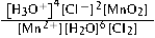
B) 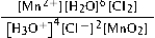
C) 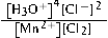
D) 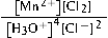
E) None of these choices are correct.
G) All of the above
Correct Answer

verified
Correct Answer
verified
A) 0.100 mol L −1
B) 0.050 mol L −1
C) 0.025 mol L −1
D) 0.0200 mol L −1
E) 0.0100 mol L −1
G) A) and E)
Correct Answer
verified
Correct Answer
verified
A) 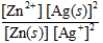
B) 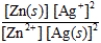
C) 
D) 
E) 
G) C) and D)
Correct Answer
verified
Correct Answer
verified
B) False
Correct Answer
verified
Correct Answer
verified
A) 2.5 × 10 −7
B) 6.5 × 10 −4
C) 1.6 × 10 −2
D) 1.7
E) None of these choices are correct.
G) B) and D)
Correct Answer
verified
Correct Answer
verified
A) 3.55 × 10 −3
B) 1.24
C) 1.47
D) 282
E) 325
G) C) and E)
Correct Answer
verified
D
Correct Answer
verified
B) False
Correct Answer
verified
Correct Answer
verified
A) 0.16 atm
B) 0.31 atm
C) 3.1 atm
D) 7.7 atm
E) 7.8 atm
G) A) and E)
Correct Answer
verified
Correct Answer
verified
A) Adding a catalyst
B) Adding more N 2
C) Increasing the pressure
D) Lowering the temperature
E) None of these choices are correct.
G) A) and B)
Correct Answer
verified
Correct Answer
verified
B) False
Correct Answer
verified
Correct Answer
verified
A) all of the reactants and products are gases.
B) in the reaction equation, the number of moles of gaseous products equals the number of moles of gaseous reactants.
C) in the reaction equation, the number of moles of gaseous products is greater than the number of moles of gaseous reactants.
D) in the reaction equation, the number of moles of gaseous products is smaller than the number of moles of gaseous reactants.
E) in the reaction equation, the total number of moles of reactants equals that of the products.
G) A) and C)
Correct Answer
verified
Correct Answer
verified
A) 10.0 g hydrogen remains
B) 10.9 g hydrogen remains
C) 15.0 g hydrogen remains
D) 19.9 g hydrogen remains
E) Need to know the equilibrium constant in order to calculate the answer.
G) B) and C)
Correct Answer
verified
Correct Answer
verified
A) The partial pressure of NO will increase.
B) The partial pressure of NO will decrease.
C) The partial pressure of NO 2 will increase.
D) The partial pressures of NO and N 2O will increase.
E) All three partial pressures will increase.
G) B) and E)
Correct Answer
verified
Correct Answer
verified
A) 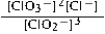
B) 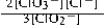
C) 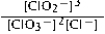
D) 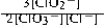
E) 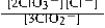
G) B) and C)
Correct Answer
verified
Correct Answer
verified
A) 4.7 × 10 5
B) 2.6 × 10 4
C) 1.9 × 10 3
D) 3.2 × 10 2
E) 18
G) A) and E)
Correct Answer
verified
Correct Answer
verified
A) K p = K c
B) K p = RT × K c
C) K p = ( RT × K c) −1
D) K p = K c / RT
E) K p = RT / K c
G) B) and D)
Correct Answer
verified
B
Correct Answer
verified
A) 0.038 M
B) 0.14 M
C) 0.28 M
D) 1.18 M
E) 2.4 M
G) D) and E)
Correct Answer
verified
B
Correct Answer
verified
A) As equilibrium is reestablished, the partial pressure of carbon disulfide increases.
B) As equilibrium is reestablished, the partial pressure of methane, CH 4, decreases.
C) As equilibrium is reestablished, the partial pressure of hydrogen decreases.
D) As equilibrium is reestablished, the partial pressure of hydrogen sulfide decreases.
E) As equilibrium is reestablished, all the partial pressures will decrease.
G) A) and B)
Correct Answer
verified
Correct Answer
verified
A) The partial pressure of hydrogen will decrease.
B) The partial pressure of hydrogen will increase.
C) The partial pressure of hydrogen will be unchanged.
D) K p needs to be known before a prediction can be made.
E) Both K p and the temperature need to be known before a prediction can be made.
G) C) and D)
Correct Answer
verified
Correct Answer
verified
B) False
Correct Answer
verified
Correct Answer
verified
Showing 1 - 20 of 98
Related Exams